A condominium owners’ meeting on a November evening. The board of directors announces that the balcony rehabilitation can no longer wait, that the selected bid exceeds $250,000 and that the contingency fund covers only part of it. The difference will be collected as a special assessment: several thousand dollars per unit, payable within a few months. In the room, only one question: how did no one see this coming?
From a technical standpoint, a condo special assessment rarely comes as a surprise. A roof, windows, concrete balconies or a parking slab have known service lives and show signs of reaching the end of that life years in advance. What catches owners off guard is that the contingency fund is not ready on the day the expense arrives.
This article explains how a special assessment is decided and allocated, why it happens, what Bill 16 changes, and how a well-prepared maintenance logbook and contingency fund study turn an unexpected bill into a plan spread over ten years, with a worked example to back it up.
What is a condo special assessment?
A special assessment, which the Civil Code calls a “special contribution to the common expenses,” is an amount charged to co-owners on top of their regular condo fees. It pays for an expense that neither the operating budget nor the contingency fund can absorb: a replacement that came sooner than planned, urgent work, or simply a fund that falls short when the bill comes due. Unlike the annual contribution to the fund, which the study is now used to calibrate, it is a one-time charge and almost always the symptom of a gap between what should have been set aside and what actually was.
How it is decided
Article 1072.1 of the Civil Code of Québec, added by Bill 16, provides that the board of directors must consult the general meeting of co-owners before deciding on any special contribution to the common expenses. Depending on the nature of the work and the declaration of co-ownership, other rules may also apply. For example, work to improve or alter the common portions requires an enhanced majority at the meeting, whereas a replacement needed to preserve the building generally falls to the board, which article 1039 makes responsible for ensuring that such work is carried out.
Before calling the meeting, the board should therefore reread its declaration of co-ownership and, if there is any doubt about the procedure or the required majority, consult a lawyer or notary who specializes in co-ownership. This article describes the general framework; it does not constitute legal advice.
How it is allocated
As a general rule, each co-owner contributes to the common expenses in proportion to the relative value of their fraction (art. 1064 C.C.Q.). A unit that represents 5.2% of the relative value therefore pays 5.2% of the assessment.
Common portions for restricted use are the exception. The owners who have the use of them, such as a reserved balcony or terrace, bear the cost of their maintenance and routine repairs alone. For major repairs and replacement of these portions, the declaration may provide for a different allocation. This is often the case for balconies and parking areas, so the declaration must be checked before allocating an assessment that affects them. The fund study must also specify the share set aside for these portions.
Why a special assessment happens: six causes that add up
In the buildings we inspect, a special assessment rarely has a single cause. It results from a chain of events in which each decision seemed reasonable at the time.
A fund underfunded from the start. For years, the only numerical benchmark in the Civil Code was a minimum of 5% of common expenses paid into the contingency fund. That floor was often treated as a target, even though it says nothing about the actual cost of a roof or a parking slab. A building that contributed the minimum for 20 years enters its first replacement cycle with a fraction of the amount required. The minimum applied to the annual contribution, not to the fund balance. Since August 14, 2025, it no longer appears in article 1072: the amounts to be paid in are now set according to the study’s recommendations and the evolution of the syndicate (art. 1071).
Deferred work that changes category. Putting work off for a year is not a mistake. The problem arises when deferral moves a component from repair to replacement, or from straightforward replacement to replacement with damage: the leak that soaks the insulation, the balcony reinforcement that keeps rusting, the masonry joint that lets water freeze behind the brick.
Age-based service lives. A membrane installed 15 years ago may have ten years left, or two. A plan that applies a theoretical service life without examining the component books the expense in the wrong year, and a special assessment fills the gap on the day the roof has to be redone five years earlier than planned.
Underestimated quantities and costs. A study is only as accurate as its quantities: roof and upstand area, number of windows, length of guardrails, slab area. A 20% error on a quantity becomes a 20% error on the expense. A generic unit cost also ignores access, scaffolding and working around occupants.
Construction inflation. According to Statistics Canada, the residential building construction price index for the Montréal area reached 115.9 in the second quarter of 2026 (2023 = 100), an increase of 8.4% in one year. The agency noted that wage increases in Québec construction contributed to this pressure. A study prepared with a low inflation assumption will systematically underestimate every future replacement.
Clustered expenses. Components installed during construction age together. In a building that is 20 to 30 years old, the roof, windows, balconies and slab often reach end of life within the same five- to ten-year window. Even if the 25-year total is funded, the balance can drop below zero in a given year.
What Bill 16 changes to help avoid a special assessment
The Regulation respecting various rules on divided co-ownership has been in force since August 14, 2025. It follows on from Bill 16 (2019) and Bill 31 (2024), and no syndicate can opt out of it. Our article on Bill 16, the maintenance logbook and the 2028 deadline presents all of the obligations. Here are the ones that directly affect the risk of a special assessment.
| Rule | What it requires | Effect on risk |
|---|---|---|
| Maintenance logbook | Inventory of the common portions and private portions under the syndicate’s responsibility; condition, remaining service life and major work over at least 25 years, with a year for each; on-site visit attested by the professional | Expenses are dated based on actual condition, not just age |
| Contingency fund study | Fund balance, cost of each intervention in the planned year, amount to be held at the start of each year, amounts to be paid in, explanation of the calculations; redone at least every 5 years in all cases | Actual need replaces an arbitrary benchmark |
| Logbook revision | At least every 5 years, or every 10 years for buildings with 8 private portions or fewer, with no common portion within a building, or with 3 storeys or fewer above ground | Condition is reassessed regularly |
| Distribution and decision | Documents provided to co-owners within 60 days; amounts set within 30 days after the annual meeting following the first study | The board cannot leave the study on the shelf |
| Replenishment | An insufficient fund brought to a sufficient level within 10 years of the first study | The catch-up is spread out instead of billed all at once |
| Certificate at sale | Fund balance compared with the recommended amount, work planned over 10 years with date and cost | Underfunding becomes visible to the buyer |
Existing syndicates have until August 15, 2028 to obtain their first logbook and their first study. Documents obtained between August 14, 2023 and August 14, 2025 remain valid for 5 years if their author already met the criteria of the regulation. The logbook must be prepared by a member of the professional order of engineers, architects, chartered appraisers or professional technologists; the study may also be prepared by a CPA. In all cases, the author must be independent: not a director, manager, co-owner or occupant. At Boreon, the maintenance logbook and the contingency fund study are signed by engineers who are members of the Ordre des ingénieurs du Québec (OIQ).
Bill 31, for its part, amended articles 1070.2 and 1071 to allow the regulation to modulate the standards according to the building’s characteristics. That is why the logbook can be revised every 10 years in small buildings, while the fund study remains on a 5-year cycle for everyone.
Worked example: a 24-unit building, two trajectories
This example is illustrative. The quantities, costs and timelines are assumptions for demonstration purposes, not an actual study: every building requires its own analysis. Per-unit amounts are averages; in practice, they are allocated according to relative value and the declaration.
The building. 24 units on four storeys, built in the early 2000s, with indoor parking under a structural slab, a flat roof of approximately 9,000 sq. ft., 24 concrete balconies and about 140 original windows and patio doors. In 2026, the fund holds $320,000 and receives $48,000 per year, or an average of $2,000 per unit (about $167 per month).
Calculation assumptions. Costs estimated in 2026 dollars, before taxes, then indexed to the year of completion using construction inflation of 4% per year, since a study must estimate each cost in its planned year of completion. Fund return: 2.5% per year. Each year, the year-end balance equals the previous balance, plus interest, plus the contribution, minus the work.
| Component | Estimated cost (2026 dollars) | Age-based plan | What the inspection reveals |
|---|---|---|---|
| Flat roof (9,000 sq. ft.) | $235,000 to $300,000 | Replacement “around 2030” | Localized wet insulation, flashing to be redone; targeted repair, replacement possible in 2033 |
| Concrete balconies and guardrails (24) | $200,000 to $260,000 | Nothing before 2035 | Spalling and corroded reinforcement; rehabilitation required around 2030 |
| Windows and patio doors (about 140) | $290,000 | Replacement “someday” | Failed sealants on two facades; two-phase replacement possible |
| Parking slab | $300,000 to $380,000 | “To be monitored” | Localized cracking and delamination; work phased over two years |
The low end of each range reflects work done at the right time; the high end reflects work done after the deterioration has spread.
Trajectory A: waiting until the work is unavoidable
The board keeps the contribution at $48,000. With no inspection, the wet insulation goes unnoticed: the roof fails in 2028 with interior damage and must be completely redone ($300,000 in 2026 dollars). The balconies, deferred to 2031, cost more because the corrosion has progressed ($260,000). The windows are replaced all at once in 2033 ($290,000), and the slab in 2035 with more extensive repairs ($380,000).
| Year | Work (dollars of the year) | Balance before special assessment | Special assessment required |
|---|---|---|---|
| 2028 | Roof: $324,000 | $109,000 | None |
| 2031 | Balconies: $316,000 | -$51,000 | $51,000, about $2,100 per unit |
| 2033 | Windows: $382,000 | -$284,000 | $284,000, about $11,900 per unit |
| 2035 | Parking: $541,000 | -$444,000 | $444,000, about $18,500 per unit |
Result: three special assessments in five years, totalling about $780,000, or nearly $32,500 per unit. And in 2036, the fund still holds only one year of contributions, while other components are approaching the end of their service life.
Trajectory B: an inspection-based logbook and study
In 2026, the syndicate obtains its logbook and its study. The inspection, supported by infrared thermography of the roof, changes the schedule: a targeted repair of the roof and flashing in 2027 ($25,000) pushes the replacement back to 2033 ($235,000); the balconies are rehabilitated in 2030 ($200,000), before the corrosion spreads; the windows are replaced in two phases, in 2032 and 2034 ($145,000 each); and the slab is addressed in 2035 and 2036 ($150,000 per phase). Total work drops from about $1,230,000 to $1,050,000 in 2026 dollars, because the damage caused by deferral is avoided. The study recommends raising the contribution to $89,000 starting in 2027, then indexing it by 3% per year.
| Year | Annual contribution | Per unit, per month | Work (dollars of the year) | Year-end balance |
|---|---|---|---|---|
| 2027 | $89,000 | $309 | Targeted roof repair: $26,000 | $391,000 |
| 2030 | $97,300 | $338 | Balconies: $234,000 | $477,000 |
| 2032 | $103,200 | $358 | Windows, phase 1: $183,000 | $524,000 |
| 2033 | $106,300 | $369 | Roof: $309,000 | $334,000 |
| 2034 | $109,500 | $380 | Windows, phase 2: $198,000 | $253,000 |
| 2035 | $112,700 | $391 | Parking, phase 1: $213,000 | $159,000 |
| 2036 | $116,100 | $403 | Parking, phase 2: $222,000 | $57,000 |
Result: no special assessment over the decade, a fund that never drops below $50,000, and an additional effort of about $22,500 per unit spread over ten years, compared with nearly $32,500 demanded in three calls under trajectory A, not counting the empty fund at the end. The increase is real, with the monthly fund share rising from about $167 to $309 per unit. But it is announced in advance, defensible at the meeting, and costs less overall because the work is done at the right time.
This example covers only the first decade. A real study covers at least 25 years, explains its calculations and also includes mechanical systems, elevators, masonry and site improvements. The contribution will be reviewed at the next study, within five years at the latest.
High-value components: service lives and end-of-life signs

A few components account for most of the amounts to plan for over 25 years. The service lives below are planning assumptions, not guarantees: in a logbook, each remaining service life is adjusted according to the component’s observed condition, exposure and maintenance history.
| Component | Planning assumption | End-of-life signs to watch for |
|---|---|---|
| Flat roof, built-up or modified bitumen (SBS) membrane | 20 to 30 years | Degranulated membrane, blisters, loose flashing, ponding water, wet insulation on infrared thermography |
| Windows and patio doors | 25 to 35 years | Window condensation or condensation between panes, worn hardware, air leakage |
| Sealants and caulking | 8 to 15 years | Cracked caulking, loss of adhesion, water stains below openings |
| Concrete balconies and guardrails | 25 to 40 years before major rehabilitation | Concrete spalling, exposed reinforcement, corrosion at anchors |
| Brick masonry | Repointing roughly every 25 to 30 years | Deteriorated mortar joints, crumbling or spalled brick, efflorescence |
| Parking slab and membrane | 15 to 25 years for the membrane | Cracks with white deposits, delamination, corroded reinforcement |
| Central heating and shared water heaters | 10 to 30 years depending on the equipment | Leaks, repeated breakdowns, hard-to-find parts |
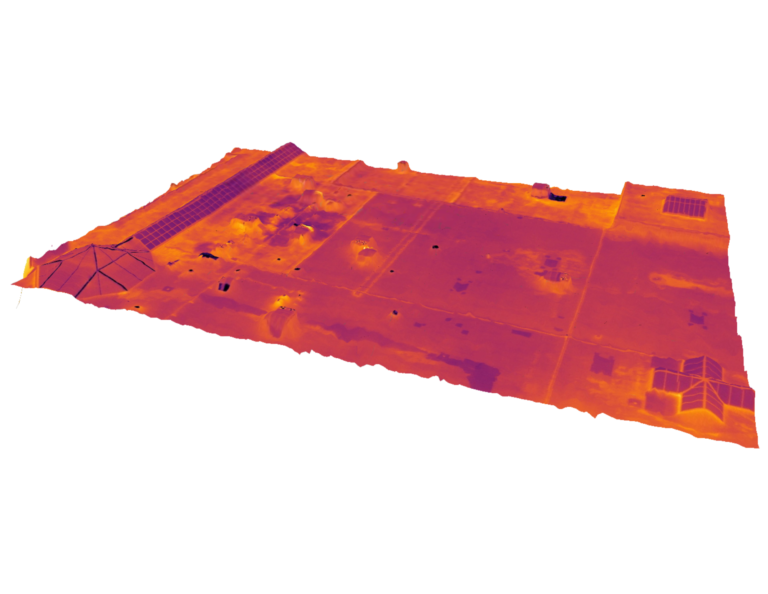
The roof deserves particular attention: moisture in the insulation is invisible from the surface and often determines the real replacement date. Our article on the lifespan of a flat roof explains what makes it vary, and roof infrared thermography locates wet insulation before a year is entered in the logbook. When the roof weighs heavily in the plan, a roof assessment with test cuts and moisture readings gives the study a solid foundation.
Reading a contingency fund study like a cash-flow plan
Most co-owners look at only one number: the recommended contribution. That is the result, not the analysis. To judge whether a study really protects against a special assessment, read it like a treasurer.
The year-by-year balance. Find the year in which the projected balance is lowest: that is the real risk zone. A fund that comes close to zero in 2034 has no margin if even one cost exceeds the estimate.
The financial assumptions. Construction inflation and fund return must be stated and justified. Compare the inflation assumption with the recent trend in the Statistics Canada index for your region; a one-point difference per year over 15 years significantly changes the cost of a replacement.
The quantities. Areas, number of windows and balconies, lengths: a study that does not show its quantities cannot be verified.
Sensitivity. A good study shows what happens if the roof must be redone three years earlier or if inflation is higher than expected. That is what allows the board to set a safety margin.
Our article on the methodology of a 25-year contingency fund study details these assumptions, and the page on the contingency fund study under Bill 16 summarizes what a compliant study contains.
How to avoid a special assessment: practical strategies
Base the logbook on a real inspection
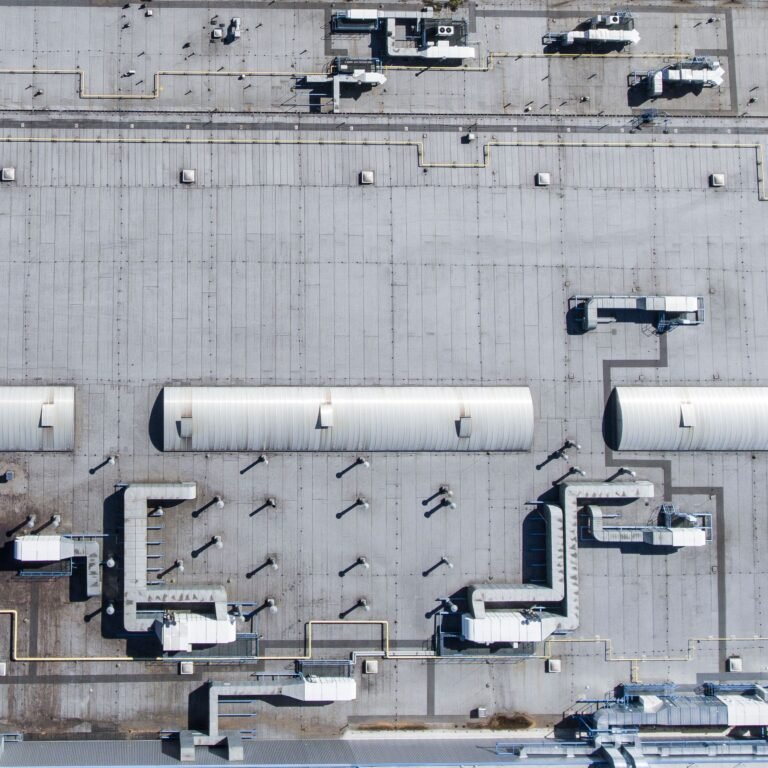
The site-visit declaration required by the regulation is a minimum. What protects the syndicate is how thoroughly the highest-cost components are examined. At Boreon, infrared thermography and drone imaging are part of every inspection: they cover the entire roof and all facades, including hard-to-reach areas, and reveal wet insulation, air leakage and thermal bridges. Suspect areas are confirmed with moisture readings before a year is entered in the logbook. Our article comparing the contingency fund, maintenance logbook and building condition assessment explains how these documents complement one another.
Use the ten-year period deliberately
Ten years is a maximum, not a recommendation. If a major expense is planned in three years, a catch-up spread over ten years will empty the fund before the end of the period. Contributions must then be front-loaded, the phasing revisited, or both, as in trajectory B.
Phase the work when it makes technical sense
A roof can sometimes be redone section by section, windows facade by facade, a slab zone by zone. Phasing flattens spending peaks, but each phase involves its own mobilization, and a severely deteriorated component may require a complete intervention. Phasing should nonetheless be evaluated before concluding that a special assessment is unavoidable.
Repair early and increase gradually
A flashing repair or a spot concrete repair costs a fraction of the replacement it delays: in our example, $25,000 spent on the roof pushes a $235,000 replacement back by several years. Likewise, an increase announced with the first study and then indexed is easier to absorb and explain than a massive adjustment five years later.
Consider financing with caution
When a major expense is imminent, some syndicates borrow rather than impose a special assessment, then repay the loan through the common expenses. This option spreads out the cost, but it adds interest, commits the syndicate for several years and does not fix the cause of the underfunding. Before going down this path, the board should check its declaration and obtain legal and financial advice.
Condo special assessments and resale value: what the buyer sees
The syndicate’s certificate now makes underfunding visible in every transaction. Among other things, it shows the fund balance and the amount that should have been available at the start of the year according to the latest study, the contributions required and paid over three years, the inspections of the last five years, and the major repairs planned over the next ten years with their estimated dates and costs. The Société d’habitation du Québec (SHQ), the provincial housing agency, provides a template; others exist, such as the one from the RGCQ (Québec’s condominium association network), but only the information required by the regulation is mandatory.
For the buyer, a fund well below its target and a long list of short-term work signal higher condo fees or a special assessment: a negotiating argument that weighs on every seller in the building. If an assessment has already been voted or announced, who pays it must be settled in the promise to purchase and confirmed with the notary. Our article on reading the syndicate’s certificate before buying details the points to check.
The role of the condo manager
The manager is often the first to see a special assessment coming: they take the calls about leaks and track repair invoices. They cannot prepare the logbook or the study, since the regulation requires the author to be independent, but their role is decisive. They help the board update the logbook at least once a year, record each intervention with its cost and note deferred work with the reason; our article Bill 16 maintenance logbook: what to record details this work. They also compare actual costs with the study’s estimates, prepare the certificate to be provided within 15 days of a request and alert the board as soon as a component deteriorates faster than expected. In doing so, they give the syndicate what it lacks most when facing a large expense: time.
Common mistakes made by boards of directors
Freezing fees to avoid complaints. This is the decision most certain to produce a special assessment.
Treating the study as a formality. A study that is compliant on paper but based on a superficial examination will not pay for the roof that fails earlier than planned.
Dipping into the fund for routine maintenance. The fund is reserved exclusively for major repairs and replacement of the common portions. Using it to balance the budget skews the plan and exposes the directors.
Deferring without recording it. The logbook must note every deferral and give the reasons. This record protects the board.
Forgetting private portions under the syndicate’s responsibility. Windows, plumbing risers or components of central systems may fall to the syndicate depending on the declaration.
Waiting until 2028. The later the study, the less useful the replenishment period and the higher costs will have climbed.
Presenting an increase without showing the plan. Co-owners are more willing to accept an increase when they see the fund projection and the special assessment it avoids.
Frequently asked questions about condo special assessments
Can the board of directors impose a special assessment?
The Civil Code requires the board to consult the general meeting of co-owners before deciding on any special contribution to the common expenses. Depending on the nature of the work and the declaration of co-ownership, other voting rules may apply. When in doubt, consult a professional in co-ownership law.
How is a condo special assessment allocated?
As a general rule, according to the relative value of each fraction, like the common expenses. For common portions for restricted use, such as balconies, the declaration may provide for a different allocation of major repairs and replacements. Always check the declaration before calculating each owner’s share.
What should be done if the contingency fund is insufficient?
Bill 16 requires the board to adjust the annual contributions to make the fund sufficient within ten years of the first study. The amounts must be set within 30 days after the annual meeting. If a major expense is near, it is better to accelerate the catch-up and revisit the phasing of the work.
Does a contingency fund study eliminate all risk of a special assessment?
No. It greatly reduces the risk, but a casualty loss, an unforeseeable failure or a spike in costs can still create a gap. Its reliability depends above all on the quality of the inspection behind the logbook, hence the annual update and the new study at least every five years.
Who pays a special assessment when a condo is sold?
This is settled in the promise to purchase and during the notarial transaction. The buyer should read the syndicate’s certificate, request a statement of common expenses owing and have it specified in writing who bears an assessment that has already been voted or announced.
Can a special assessment be avoided when the work is urgent?
The options narrow, but some may remain: a targeted repair to buy time, phasing, or a loan taken out by the syndicate and repaid over several years. Each option must be assessed technically and legally; a loan involves interest and may require the approval of the general meeting.
How long does a condo roof last?
A flat roof with a built-up or modified bitumen (SBS) membrane generally lasts 20 to 30 years, but two roofs of the same age can have very different remaining service lives. Drainage, flashing, past repairs and moisture in the insulation make the difference. An inspection with infrared thermography makes it possible to estimate the remaining service life based on actual condition.
Conclusion: make the special assessment a decision, not a surprise
A condo special assessment is most often the deferred bill of an underfunded reserve, a plan based on age rather than condition, or work deferred for too long. The current framework gives syndicates the tools to avoid it, but those tools are only as good as the inspection that feeds them.
Boreon is an independent firm that sells neither repairs nor construction work. Our maintenance logbooks and contingency fund studies are based on a complete inspection of the common portions, with infrared thermography and drone imaging, and are signed by engineers who are members of the OIQ. To find out the real gap between your fund and your needs before it turns into a special assessment, request a quote for your maintenance logbook and contingency fund study.
Sources
- Government of Québec, “Rules on the management of divided co-ownerships”: www.quebec.ca
- Société d’habitation du Québec (SHQ), Regulation respecting various rules on divided co-ownership: explanatory guide to the measures, August 2025: cdn-contenu.quebec.ca
- LégisQuébec, Civil Code of Québec, arts. 1039, 1064, 1068.1, 1070.2, 1071, 1072, 1072.1 and 1076.1: www.legisquebec.gouv.qc.ca
- An Act mainly to regulate building inspections and divided co-ownership (S.Q. 2019, c. 28, Bill 16): www.publicationsduquebec.gouv.qc.ca
- An Act to amend various legislative provisions with respect to housing (S.Q. 2024, c. 2, Bill 31): www.publicationsduquebec.gouv.qc.ca
- Statistics Canada, The Daily, “Building construction price indexes, second quarter 2026,” July 24, 2026 (table 18-10-0289-01): www150.statcan.gc.ca