An energy audit answers a simple question: where is your building losing energy, and in what order should you fix things? The landscape has also shifted: Quebec’s Rénoclimat program was overhauled on October 1, 2026, and the federal Greener Homes programs are closed. Here is how to find your way, with information verified in October 2026.
Why do an energy audit
- Comfort: drafts, cold rooms, icy floors and condensation on windows almost always have a measurable cause.
- Bills: you target the biggest losses first rather than the most visible work.
- Building value: a documented file reassures a buyer, lender or insurer.
- Financing: for an existing rental building, CMHC’s MLI Select program awards points based on the targeted reduction in energy consumption (15%, 25% or 40% compared with current performance).
- Grants: most programs require measurements, proof and a specific sequence of work.
Residential vs commercial and multi-unit: two approaches
For a house or small plex, the Canadian reference is the EnerGuide Rating System: a standardized evaluation, performed by a registered energy advisor working for a registered service organization, that models the home’s consumption and compares it with a reference. For a commercial or institutional building or a large multi-unit property, audits follow the ASHRAE levels (see below), which include central systems, controls and the actual consumption profile.
What an audit looks at
The building envelope
- Insulation: attic, walls, rim joist, foundations, exposed floors.
- Air tightness: often the leading source of heat loss and discomfort in older buildings.
- Windows and doors: seal condition, glazing performance, installation.
Mechanical systems
- Heating and cooling: type, age, sizing, controls.
- Ventilation: presence and operation of a heat recovery ventilator (HRV) or energy recovery ventilator (ERV), exhaust fans, airflow.
- Domestic hot water and heat recovery.
The roof
The attic is often where the largest warm-air leaks occur. Insufficient insulation, poor ventilation or air leaks into the attic lead to ice dams and condensation.
The tools
- The blower door test: a fan depressurizes the building to measure its air tightness, expressed in air changes per hour at 50 pascals (ACH50). It is part of every EnerGuide evaluation.
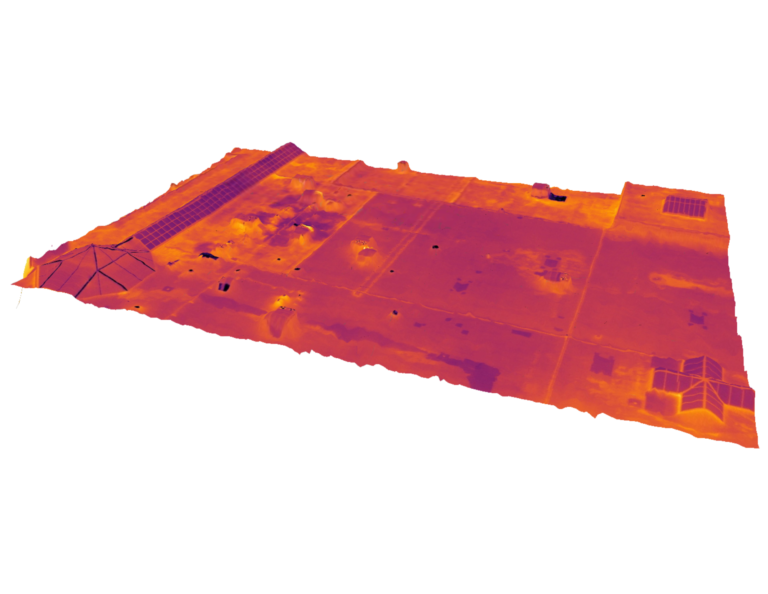
- Infrared thermography: it reveals cold areas, air leaks and moisture. Combined with depressurization, it pinpoints leaks. See our article Thermography: what the camera reveals.
- Data analysis: 12 to 24 months of electricity or gas bills, weather-normalized, and for larger buildings, peak demand and operating schedules.
Official route or technical diagnostic?
Rénoclimat since October 1, 2026
According to the Government of Quebec, the Energy Efficiency component of Rénoclimat now works as follows:
- The pre-retrofit energy evaluation is no longer mandatory but recommended. It is carried out by a registered service organization (EnerGuide registered energy advisor) of the owner’s choice, and up to $500 in assistance is available toward its cost.
- The post-retrofit evaluation has been removed from this component.
- Work must be done after October 1, 2026, by a contractor holding the appropriate RBQ licences, with a signed compliance attestation form.
- Eligible measures: roof, exterior wall and foundation insulation, replacement windows certified ENERGY STAR (Most Efficient category), plus new measures (stationary battery, connection to a backup power source). Air sealing, HRVs/ERVs, doors and drain-water heat recovery are no longer subsidized.
- Maximum assistance: $21,500 for a house, $31,000 for a duplex, triplex or multi-unit residential building.
A transition period lets you complete a file under the old rules: pre-retrofit appointment requested by October 12, 2026, and post-retrofit evaluation completed by March 31, 2027. The new application portal is announced for fall 2026; until then, keep all your supporting documents. A new component, Rénoclimat – Adaptation, also covers flood protection.
Other programs
- LogisVert (Hydro-Québec): still in effect in October 2026, for measures such as heat pumps, heat storage units, and roof insulation and caulking. Hydro-Québec notes that on October 8, 2026, the federal government announced heat pump grants starting in 2027, with details not yet available.
- Canada Greener Homes Grant: closed to new applicants; the deadline to complete an open file was December 31, 2025. The Canada Greener Homes Loan accepted its last applications on October 1, 2025.
What sets a technical diagnostic apart
| EnerGuide evaluation (Rénoclimat) | Technical building diagnostic | |
|---|---|---|
| Purpose | Standardized rating, recommendations, access to assistance | Understand causes: leaks, moisture, defects, system condition |
| Output | EnerGuide rating and standardized report | Documented findings, thermal images, priority plan |
| When | Before planning subsidized work | Comfort or moisture problem, purchase, long-term planning |
The two complement each other: the diagnostic explains why the building behaves as it does; the rating measures how much it consumes using a recognized method.
Commercial and multi-unit buildings: ASHRAE levels
- Level 1: walk-through and bill analysis; identifies simple, low-cost measures and areas worth investigating further.
- Level 2: detailed survey with savings and cost calculations for each measure; the usual level for building an investment plan.
- Level 3: in-depth analysis of major projects, with field measurements or simulation, to support a significant capital decision.
On the funding side, Hydro-Québec offers its Efficient Solutions program, which includes an Energy Analysis component (March 2026 guide, in French). The Government of Quebec’s ÉcoPerformance program has operated under a new regulatory framework since July 7, 2026; since September 1, 2026, it no longer accepts new applications for building mechanical system retro-commissioning (RCx). Always confirm eligibility before starting work.
Prioritizing the work
- Deal with water first: leaks, roofing, drainage. Never insulate over a moisture problem.
- Air sealing: attic, rim joist, plumbing and electrical penetrations.
- Insulation: where the cost-to-benefit ratio is best, often the attic and foundations.
- Windows: when they are at end of life or clearly deficient.
- Ventilation: a tighter home needs a controlled fresh air supply.
- Heating and cooling: sized for the new load, once the envelope is improved.
Common mistakes
- Installing a heat pump before sealing leaks: the unit is sized for losses that will shrink and will perform less well.
- Tightening the envelope without ventilation: moisture, condensation, mould and poorer air quality.
- Starting work without checking a program’s conditions (dates, RBQ-licensed contractor, supporting documents).
How Boreon helps
Boreon performs technical diagnostics of the building envelope and mechanical systems. Our team brings together technicians, InterNACHI-certified inspectors and an engineer who is a member of the Ordre des ingénieurs du Québec. Thermography is included in every inspection: it lets us locate air leaks, missing insulation and damp areas rather than assume them. We examine the roof, attic, ventilation, heating and hot water, then deliver a clear priority plan: what to fix, in what order, and why.
Boreon is not an EnerGuide registered energy advisor, and our diagnostic does not replace an EnerGuide rating: if you are aiming for Rénoclimat, the official evaluation must be done by a registered service organization. Our role is complementary: understanding causes and prioritizing work. Our report helps you arrive prepared and choose the right work. Learn more in Thermography: what the camera reveals.
FAQ
Is the Rénoclimat evaluation still mandatory?
No. Since October 1, 2026, it is optional but recommended under the Energy Efficiency component, and up to $500 in assistance covers its cost. Files started under the old rules follow the transition period.
Does thermography replace the blower door test?
No, they complement each other. The test measures overall air tightness; the camera shows where the leaks and insulation defects are.
Should I install my heat pump before or after insulating?
Ideally after improving the envelope, so the unit is sized for the building’s real needs.
Does the federal Greener Homes Grant still exist?
No, it is closed to new applicants, and the related loan has not accepted applications since October 1, 2025. A federal heat pump program has been announced for 2027; its details remain to be confirmed.
Which ASHRAE level should I choose for my building?
Level 1 is enough for an initial picture; Level 2 is generally needed to plan and finance work; Level 3 is for major projects.
Case study
Real example: wet roof insulation can drive energy bills up. See how a thermographic survey proved it on an industrial building. Read the case study →
Sources
- Government of Quebec – Rénoclimat financial assistance
- Government of Quebec – Rénoclimat changes in effect since October 1, 2026 (French)
- Rénoclimat – Comparison of old and new criteria (PDF, French)
- Find a registered EnerGuide service organization
- Hydro-Québec – LogisVert program
- Hydro-Québec – Efficient Solutions, Energy Analysis component guide (March 2026, PDF, French)
- Government of Quebec – ÉcoPerformance program (French)
- Natural Resources Canada – Canada Greener Homes Initiative
- CMHC – MLI Select
- ASHRAE – Standards and guidelines (Standard 211, commercial building energy audits)