You lift the attic hatch in a house built before 1990 and see a grainy, grey-brown or silver-gold insulation? It may be vermiculite, often sold under the Zonolite brand. No need to panic, but take it seriously before you sign: this insulation may contain asbestos, and removing it involves real costs and regulatory requirements in Quebec.
What is vermiculite and why was it used?
Vermiculite is a naturally occurring mineral made of shiny flakes that resemble mica. When heated, the flakes expand 8 to 30 times their original size, according to the U.S. Environmental Protection Agency (EPA). Lightweight, fire-resistant and odourless, the resulting material was easy to pour between attic joists or into wall cavities.
How to recognize it
According to the EPA, vermiculite insulation is a pebble-like, pour-in product, usually grey-brown or silver-gold, with particles ranging from very fine to about 2.5 cm. A few clues:
- loose-fill insulation between the joists, with no batts or paper;
- light, layered granules that reflect light;
- a layer sometimes hidden under newer insulation;
- granules sifting out around pot lights or the attic hatch.
You can spot a suspect material by eye, but you can never tell by eye whether it contains asbestos.
Why asbestos? The story of the Libby mine
Asbestos is not a natural component of all vermiculite. The problem comes mainly from the Libby mine in Montana. Health Canada states that ore produced there from the 1920s to 1990 may contain asbestos, and that the mine supplied the majority of the world market for vermiculite insulation, mostly sold under the Zonolite brand name. The EPA estimates that Libby was the source of over 70% of all vermiculite sold in the United States from 1919 to 1990.
Not all vermiculite produced before 1990 contains asbestos, but Health Canada considers it prudent, in the absence of evidence to the contrary, to assume it may. The CNESST also lists vermiculite insulation among materials that may contain asbestos.
The real risk: disturbance, not mere presence
Asbestos is hazardous when its fibres are airborne. When inhaled, they can cause asbestosis, mesothelioma and lung cancer, usually decades after exposure.
The good news: Health Canada states there is no evidence of a health risk if the insulation remains sealed behind walls and floorboards, isolated in an attic, or otherwise kept from the interior environment. The risk arises during maintenance, renovation or demolition: an electrician running a wire, a contractor adding insulation.
What to do, and what not to do
Health Canada and provincial public health authorities recommend that you:
- leave the insulation undisturbed, the best way to reduce the risk;
- seal openings in the ceiling (light fixtures, hatch, cracks);
- not use the attic for storage or let children play there;
- warn anyone who has to work in the attic;
- never try to remove it yourself.
Testing: useful, but with limits
In Quebec, regulations require that any material likely to contain asbestos be presumed to contain it unless shown otherwise, notably through laboratory analysis of a sufficient number of representative samples (CNESST). The IRSST method for materials (MA-244) relies on polarized light microscopy (PLM).
Vermiculite poses a particular challenge: a “not detected” result does not guarantee that the whole attic is free of asbestos. The EPA warns that testing may, depending on the method, give erroneous results, and recommends treating vermiculite as if it contained asbestos. New York State goes further and presumes it contaminated, since no approved method can reliably prove otherwise.
Have sampling done by a qualified firm, ideally at several locations and depths, and the analysis by an accredited laboratory. Never take a sample yourself.
Decontamination in Quebec: who does it and what drives the cost
Work involving asbestos is regulated by the CNESST, notably under subdivision 3.23 of the Safety Code for the construction industry (CSTC), which classifies it as low, moderate or high risk. According to the interpretation table published by the Government of Quebec, handling friable materials that generate more than 0.3 m³ (10 ft³) of debris is high-risk work, a threshold a full attic usually exceeds. The specialized contractor must then, among other things:
- set up a sealed enclosure under negative pressure and a decontamination area;
- provide respiratory protection and protective clothing;
- post “Asbestos – Danger” signs at each access and sample the air;
- place debris in sealed, labelled containers;
- send the CNESST a notice of opening of a construction site describing its methods.
We do not publish price ranges, because amounts vary too much from one case to another. Cost depends mainly on the attic area and depth of vermiculite, accessibility, its presence in walls or mixed with other insulation, restoration work afterwards (air sealing, ventilation, new insulation) and waste disposal. Get written quotes from specialized contractors before your conditions expire.
The impact on your purchase
Negotiation. With quotes in hand, you can ask for a price reduction, a credit, or for the seller to have the work done by a specialized contractor before the sale, with supporting documents.
Insurance and financing. Before removing your conditions, check with your insurer and lender: their requirements vary.
Renovations. Adding insulation, correcting roof ventilation, air sealing the ceiling or running wiring: all of this work disturbs vermiculite. If you plan to improve the building envelope, include asbestos abatement in your budget from the start.
What our inspection checks in the attic
During a pre-purchase inspection, our InterNACHI-certified inspectors examine the attic when it can be accessed safely. If we suspect vermiculite, we observe it without handling it and flag it clearly in the report, with photos and recommendations. We also assess the apparent insulation depth, ventilation, signs of condensation and the condition of the roof deck.
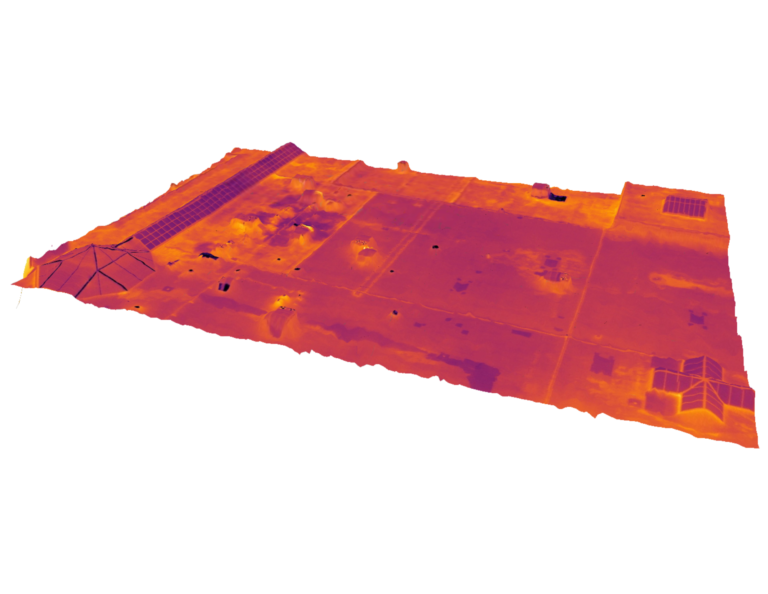
Thermography, included in every inspection, reveals ceiling areas where insulation is missing or has settled, as well as air leaks. It does not detect asbestos, but it helps gauge the scope of envelope work. Boreon does not do sampling, analysis or decontamination: we refer you to accredited laboratories and specialized contractors.
Buyer’s checklist
- Check the year of construction and the seller’s declaration.
- Do not handle the insulation during visits.
- Have the attic inspected during the pre-purchase inspection.
- Presume asbestos is present, or have sampling done by a qualified firm.
- Get quotes before your conditions expire.
- After the purchase, seal ceiling openings.
Frequently asked questions
Is it dangerous to live in a house insulated with vermiculite?
According to Health Canada, insulation that is contained and kept from the interior environment poses very little risk. The danger comes from disturbing it.
Does a negative test mean there is no asbestos?
Not necessarily. Given the limits of analytical methods for this material, a negative result should be interpreted with caution.
Can I add insulation on top?
That work is likely to disturb the vermiculite. Consult a specialized asbestos contractor first.
Can I remove vermiculite myself?
No. Health Canada and the EPA advise against it. Hire a specialized contractor who complies with CNESST requirements.
Buying an older home in Greater Montreal? Request your pre-purchase inspection quote, thermography included.
Sources
- Health Canada: vermiculite insulation that may contain asbestos (2004)
- Government of Canada: Vermiculite Insulation Containing Tremolite Asbestos
- Manitoba Health: Vermiculite Insulation and Asbestos
- US EPA: Asbestos-Contaminated Vermiculite Insulation
- CNESST: Asbestos
- Government of Quebec: asbestos and risk levels (French)
- Safety Code for the construction industry
- IRSST: method MA-244 (French)
- New York State Department of Labor: Additional Vermiculite Guidance